Textiles machines
The requirements for flexibility and functionality of drive concepts are growing constantly in the textile industry. Trends are usually short-lived and the competing manufacturers are under enormous cost pressure. In order to be future-oriented, machines therefore have to run dynamically and economically in a wide range of applications, be user-friendly and supply high-quality products in the end.

► Learn more about liquid-cooled servo drives in the Baumüller Motion Arena!

The textile chain – Spinning mill
The textile chain starts with the production of yarns These are manufactured of various raw materials, such as cotton, linen, hemp, wool, goat's wool, nylon, polyester, etc. To make a broad product range possible, the qualitative preparation of the raw material is strongly influenced very differently. Spinning mill preparation machines have the task to form the fibers into a yarn. Ball openers, cleaners, mixers, cards, stretchers and combing machines are required for this. Various processes are employed depending on the area of use. Finally the fibers can be spun into a thread.
The textile chain – Manufacturing of textiles
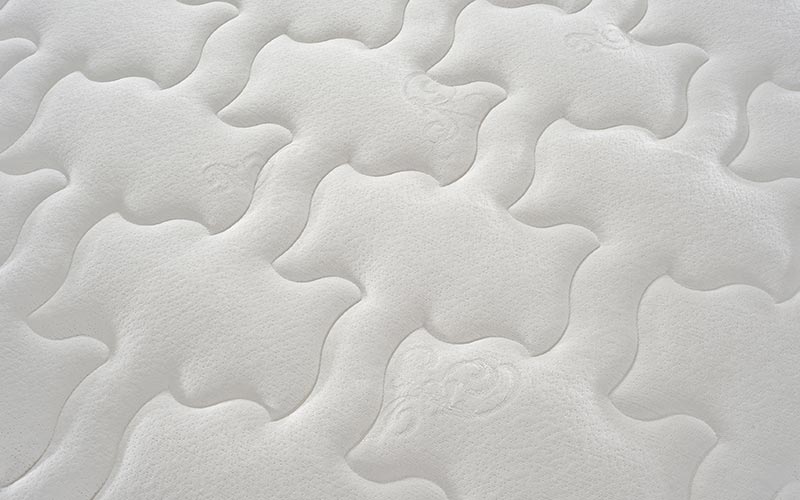 In the next step the threads are woven, knitted, crocheted or worked into a textile fabric, that is, into material. Weaving is the dominating type of producing fabric. Before the weaving process can even start, some preparations must be made. Included in this are especially winding, twisting, warping and sectional warping and smoothing. There are special machines for these tasks, which belong to the weaving preparation. Woven textiles have a broad field of application: From clothing to carpets up to the manufacture of technical textiles.
 Water-cooled electric motors – In which cases do they make sense? Things to consider
The textile chain – Finishing the textiles
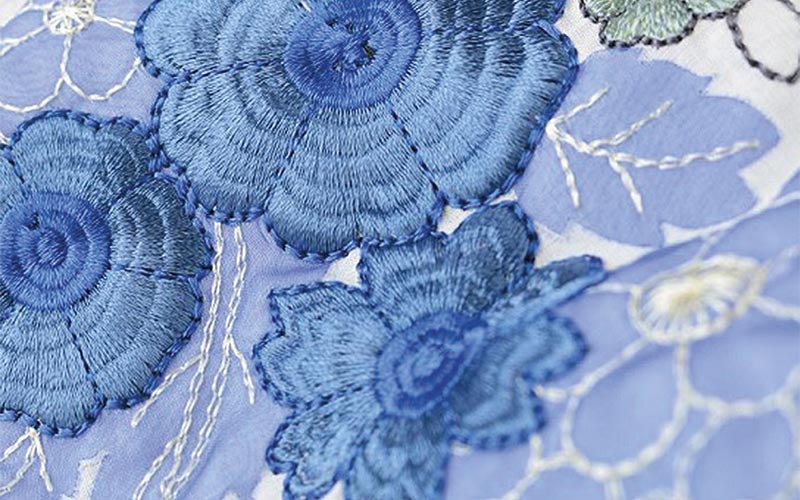 The produced fabric received additional properties during the textile finishing. It will be dyed, printed, made no-iron, impregnated or patterns and paint applied. There is a difference here between dry and wet finishing. Textile finishing is done either mechanically or using chemical substances. Also, embroidering the fabric is included in finishing. When using thermocut, lasercut, cord and sequin processes there is the possibility of making the material very individual and fashionable. Finally the finished fabric is further processed by sewing and clothing machines.

Embroidery in record time
Baumüller supplies a highly dynamic drive system for the MVD75 large embroidery machine from LÄSSER AG.
- Comprehensive process knowledge for optimal results
- Intelligent control system
- Servo motors for increased dynamics

An ingenious solution: From metal wool to metal fiber yarn
In cooperation with Baumüller and the Technical University of Dresden, Deutsche Metallfaserwerk Dr. Schwabbauer GmbH & Co. KG has developed a yarn winder for the production of metal fiber yarn with six drives and an application-optimized software solution

Multi-needle lock stitch
In cooperation with Baumüller, Dahmen has developed the world's most productive multi-needle lockstitch machine with a 1'' needle gauge

Multi-needle quilting machine comprehensively automated
Dahmen equipped its multi-needle quilting machine with Baumüller drive components. The complete package with a integrated analysis tool ensures maximum productivity.
References:


Write us a message, our sales experts will be happy to advise you.