The latest propulsion technology for greater environmental protection
Electric and hybrid marine propulsion systems reduce CO₂ emissions and help meet stricter environmental regulations. The technologies used include batteries, hydrogen fuel cells, and methanol-based generators, combined with optimized system integration. Each ship has its own specific requirements for the propulsion system.
Ronja Ruteplate: “Blue Angel” Certification for the Propulsion System of the Hybrid Pollution Control Vessel
Baumüller was once again engaged by the SET shipyard to supply a diesel-electric propulsion system for the multipurpose vessel Ronja Ruteplate. The new vessel for the Lower Saxony State Agency for Water Management, Coastal Protection, and Nature Conservation (NLWKN) is intended, among other things, to serve as an oil spill recovery vessel to collect oil from ships in distress.
At the heart of the Ronja Ruteplate is a serial hybrid drive. Three diesel engines power the generators, while two electric motors, each with a capacity of 375 kW, drive the ship's propellers. The result: The ship responds quickly and can be maneuvered with precision. The built-in battery offers additional flexibility. It enables particularly low-emission operation, for example in inland waters or sensitive port areas.
The diesel-electric propulsion system impresses not only in terms of performance but also in terms of environmental and climate protection: for this, it has been awarded the “Blue Angel” eco-label. The propulsion system's various energy sources also give the ship maximum flexibility for a wide range of tasks.
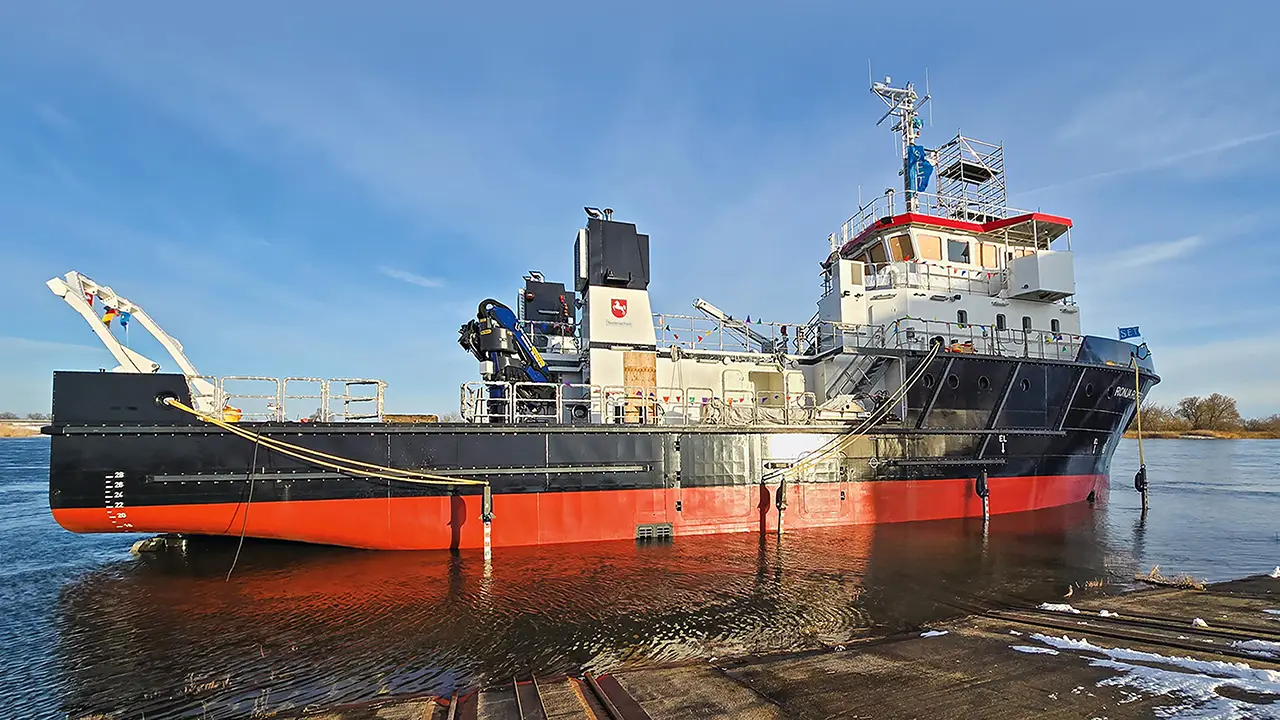 Different energy sources for high environmental standards and flexibility: The multipurpose vessel Ronja Ruteplate has been awarded the “Blue Angel” eco-label and stands out for its precise maneuverability | Photo: SET Shipyard
Baumüller Group
SMM 2026, September 1-4, 2026, Hamburg (Germany)
Hall A4, Stand 334
